With the rapid growth of lithium-ion battery manufacturing and Battery Energy Storage Systems (BESS), the risks associated with combustible dust and flammable gases have become increasingly critical.
These risks are especially significant in processes such as:
material mixing
dust collection
electrode processing
battery storage
Based on extensive project experience and technology from REMBE (Germany), Beta has developed a comprehensive Explosion Protection solution for battery plants, compliant with international standards such as NFPA 68 and EN 14797.
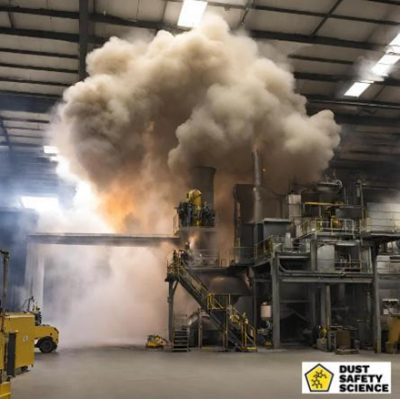
During battery production, materials such as graphite, metals, and chemicals can generate highly explosive dust with the following characteristics:
KSt up to ~100 bar·m/s
Maximum explosion pressure (Pmax) ~7 bar
Low minimum ignition energy (MIE)
→ This indicates a high risk of dust explosion if not properly controlled.
Beta’s Solution:
Design of explosion isolation systems between silos and hoppers
Installation of rupture discs / explosion vents at critical points
Layout optimization to prevent explosion propagation
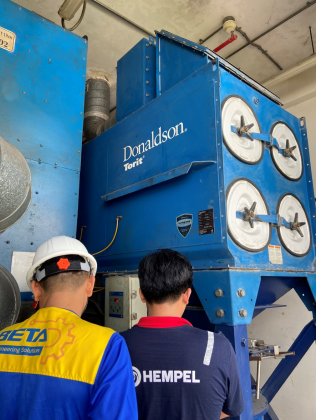
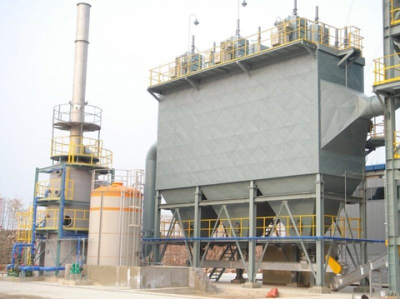
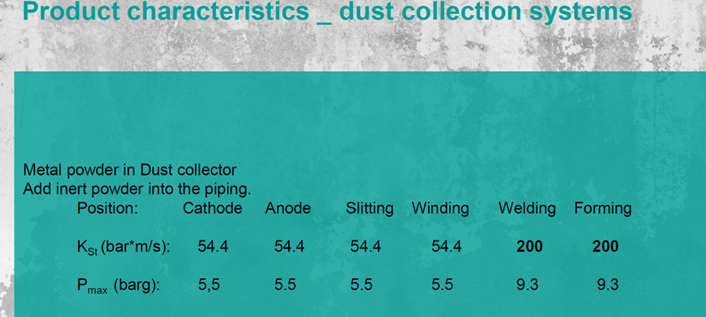
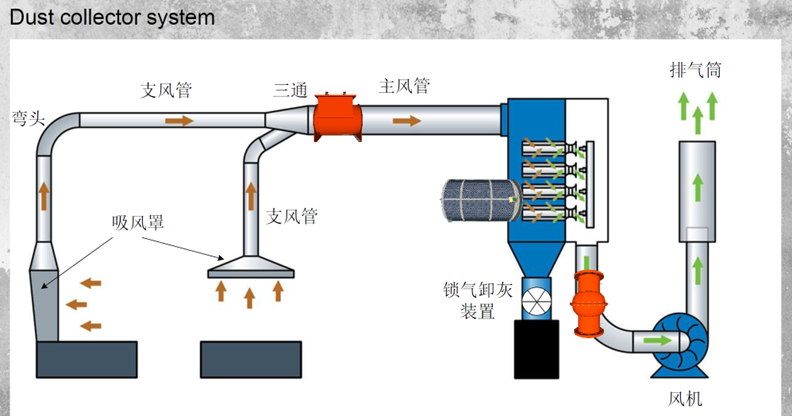
Dust collection systems in battery plants contain fine metallic particles, which are extremely hazardous:
KSt ~54 – 200 bar·m/s
Pmax up to ~9.3 bar
→ This is one of the highest-risk areas in the entire facility.
Beta’s Solution:
Explosion venting design in accordance with NFPA standards
Integration of explosion isolation devices (Q-Flap / Q-Rohr / Flameless vent)
Optional explosion suppression systems for indoor applications
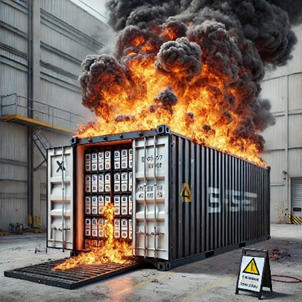
Global incidents have shown that BESS failures can occur due to:
short circuit
overcharge
thermal runaway
Generated gases include:
Hydrogen (H₂): 5–21%
Carbon monoxide (CO): 2–18%
Flammable hydrocarbons
→ When gas concentration reaches critical levels, the risk of gas explosion becomes extremely high.
Beta’s Solution:
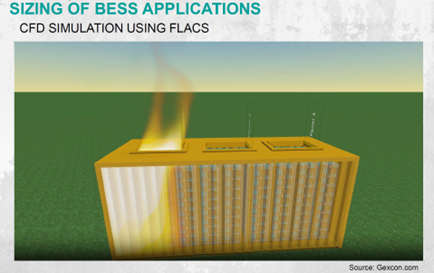
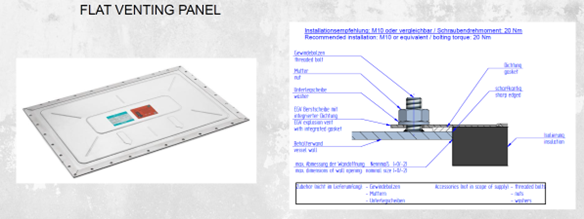
Explosion Venting Panels (EGV) for BESS containers
Pressure shock-resistant design
CFD simulation for optimized vent sizing
Battery recycling processes include:
Discharging → Crushing → Separation → Leaching
These processes generate gases, dust, and thermal reactions.
Additionally, real-world incidents show:
defective batteries can trigger fire propagation in storage areas
early detection is difficult without monitoring systems
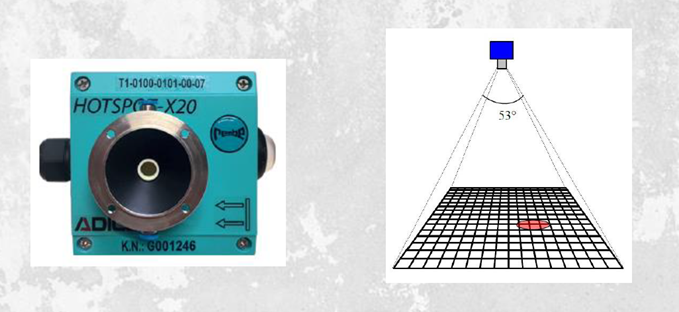
Beta’s Solution:
Hotspot detection systems
Thermal runaway monitoring in battery storage
Explosion-resistant silo and room design
Beta delivers not only equipment but complete solutions following the ESIC model:
Explosion vent sizing according to NFPA 68
CFD simulation (FLACS)
Analysis of KSt, Pmax, and MIE
REMBE Explosion Vent (EGV, KUB, Q-Series)
Explosion Isolation
Flameless vent
Installation compliant with ATEX / IECEx
FAT / SAT execution
Operator training
Compliance with global standards (NFPA, EN, ATEX)
Significant reduction of explosion risks
Protection of personnel and assets
Compliance with audits from global corporations (Unilever, Heineken, Intel…)
Improved operational reliability
Battery manufacturing and energy storage industries are among the highest-risk sectors in terms of explosion hazards.
Investing in the right explosion protection solution from the beginning is not only a technical requirement but a critical factor for safe and sustainable operation.
→ Explosion protection for battery plants must be properly engineered, standards-compliant, and implemented by experienced professionals.
Beta Solution, as a partner of REMBE in Vietnam, is committed to delivering comprehensive, international-standard explosion protection solutions optimized for long-term investment efficiency.
What explosion protection solutions are required for battery plants?
→ Explosion venting, explosion isolation, suppression systems, and monitoring solutions.
Why are dust collection systems high-risk?
→ Due to high concentrations of combustible dust and rapid pressure buildup.
Are BESS systems at risk of explosion?
→ Yes, especially due to thermal runaway and flammable gas generation.
📞 Hotline: 090 335 8452
📧 Email: info@betasolution.vn
🌐 Website 1: https://beta-solution.vn
Website 2: https://betasolution.vn/vi.html
Author: Admin